
The Quiet Ritual Nobody Talks About
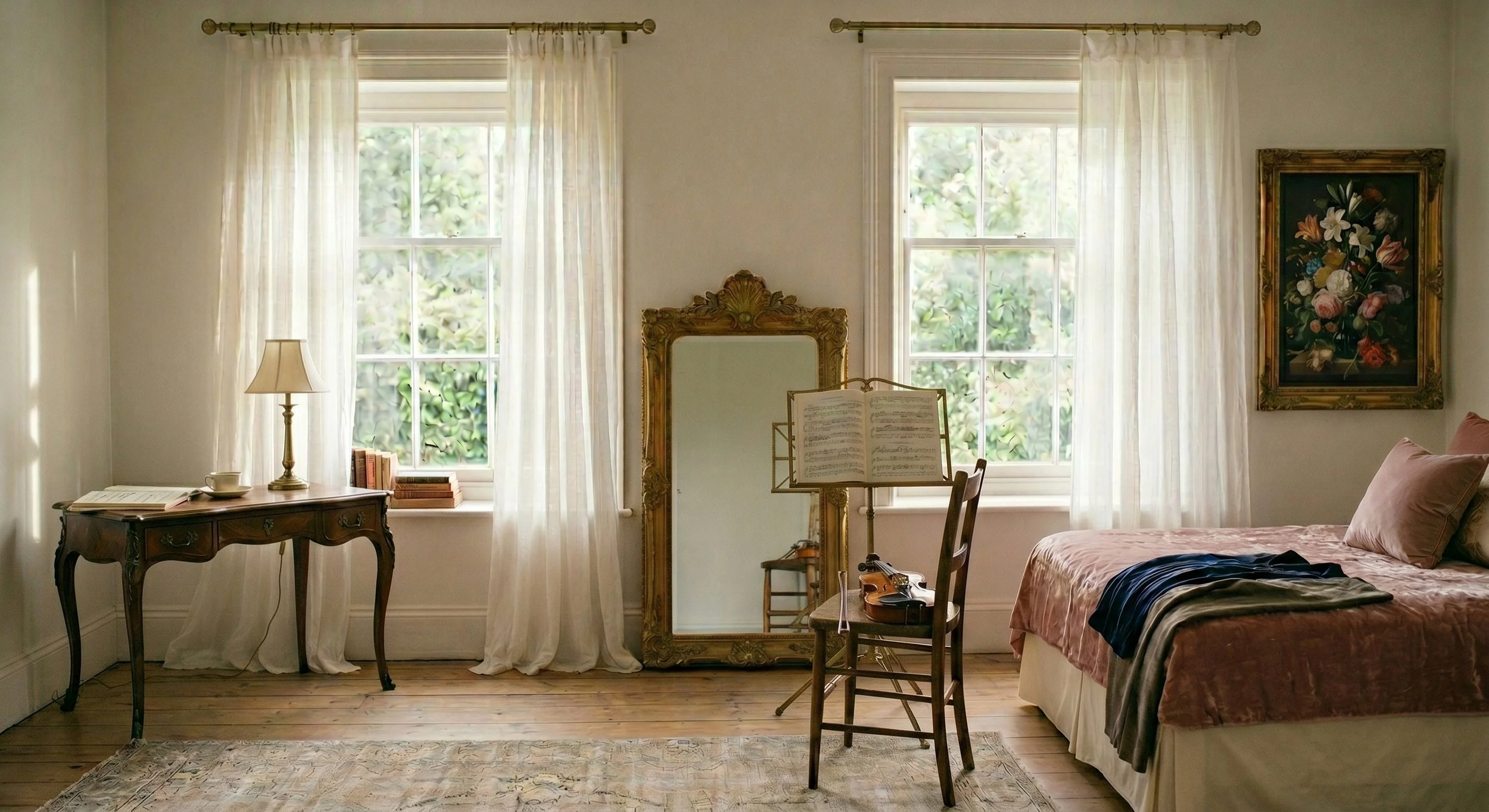
There is a moment, just before you get dressed, when anything is possible.
The wardrobe is open. The day hasn’t started yet. You are standing in the small private space between who you were yesterday and who you are about to be — and for just a few seconds, before the choosing begins, it is completely quiet.
Most of us rush past that moment. We grab what’s easy, what’s clean, what we wore last Tuesday. We treat getting dressed like a problem to solve rather than a ritual to inhabit. And then we wonder, somewhere around midmorning, why we feel slightly off. Slightly not ourselves.
Here’s what I’ve come to believe: getting dressed is self-care. Not in the hashtag sense. Not the face mask and bubble bath sense. In the oldest sense — the act of attending to yourself with intention, of saying this body, this day, this version of me deserves a moment of consideration.
Think about the last time you got dressed slowly. Maybe it was for something that mattered — a dinner, a milestone, a morning when you had nowhere to be and no one waiting. You took your time. You tried something on and stood with it for a moment before deciding. You noticed how the light fell. You paid attention. Did you feel different walking out the door? Of course you did. That feeling isn’t vanity. It’s the result of having been present with yourself. Of having treated the ordinary act of covering your body as something worth doing with care.
We do this for other rituals without question. We grind coffee beans instead of using instant. We set the table even when it’s just us. We light a candle before a bath. We understand, instinctively, that the way we do small things shapes how we experience our days.
Getting dressed is no different. It just got lost somewhere along the way — buried under the noise of trends, the tyranny of fast fashion, the cultural message that caring about what you wear is shallow, or frivolous, or something you’re supposed to have outgrown. You haven’t outgrown it. You’ve just been rushing. And maybe, if you’re honest, you’ve also been avoiding. The mirror. The question of what fits now. The wardrobe full of clothes that belong to a version of you that’s still in there somewhere, just changed.
There’s a reason musicians warm up before they play. It isn’t only about the fingers or the embouchure or the breath. It’s about transition — about moving from the ordinary world into a state of presence and attention. The warm-up is a threshold. It says: what happens next matters, and I am preparing myself to meet it.
Getting dressed can be that threshold. Not every day. Not when you’re running late or the cat knocked something over or you have seventeen things before 9am. But some days — more days than you think, if you create the conditions for it — the act of choosing what to wear can become the moment when you step across from the noise of everything else into yourself.
That is not a small thing. That is, quietly, enormous.
The women I know who dress well don’t spend more time at it. They just stay in the room a little longer. They let the choosing be the thing, rather than the obstacle to the thing. They notice what their hand reaches for first. They stand in front of the mirror long enough to actually see themselves — not just check for wrinkles. They pay attention to how clothes feel on the body, not just how they look. The weight of a good fabric. The way a particular color shifts something before you’ve consciously registered it.
They let there be sound. Not the news, not a podcast demanding their attention. Music that holds space without filling it. That moves underneath the experience rather than over it.
None of this is indulgence. It’s just paying attention to yourself — which, somewhere along the way, got filed under optional.
This is what Second Bloom is really about, underneath all the practical guidance. Not the rules. Not the capsule wardrobe formulas or the color analysis or the “how to look ten years younger” advice that I will never, ever give you. Those are tools at best, noise at worst.
What I care about is this: that you walk out the door feeling like yourself. That you’ve had, at least for a few minutes, the experience of tending to yourself with the same care you’d give anything else you value. That getting dressed becomes, slowly and over time, something you look forward to rather than something you do on autopilot in the dark.
The wardrobe is open. The day hasn’t started. That moment belongs to you.
This essay is the inspiration behind the Second Bloom Listening Guide — a collection of playlists built for every stage of your style life. Find it [here].